
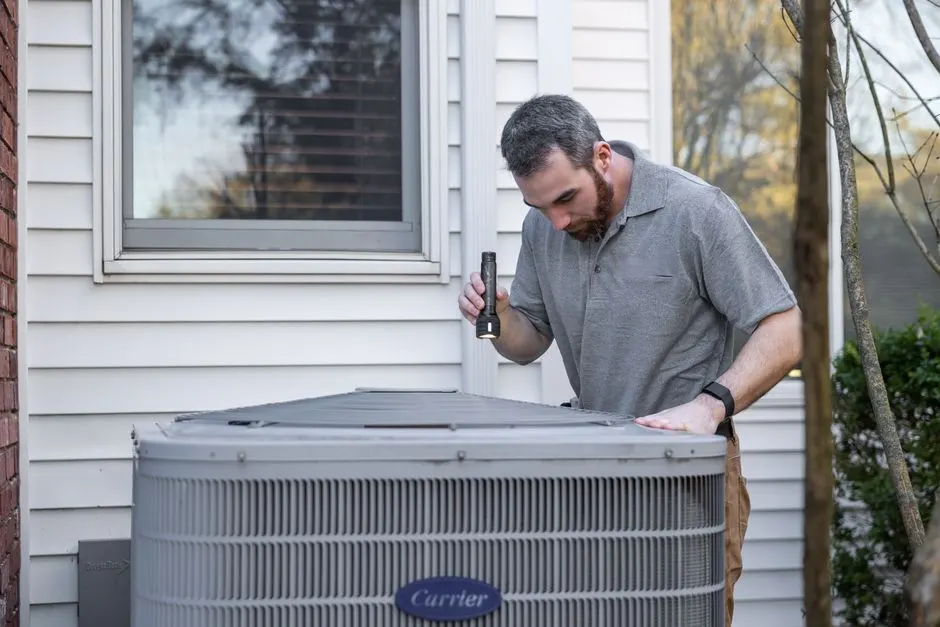
The best time to replace your furnace in Utah is spring, roughly April through early June, with early fall as the second-best window. Replacing in spring means you are not competing with every other homeowner for an install slot the week the first hard freeze hits, and you usually pay less than you would in a December emergency.
Best time to replace your furnace in Utah is a scheduling decision that comes down to three things: how old your unit is, how much it costs to keep running, and whether you can afford to wait through another winter. Here is how to figure out where you stand, what a replacement costs in 2026, and how to time it so you are not the person calling us at 11 p.m. on a 12-degree night.
The short answer: spring and early fall
Spring and early fall are the best seasons to replace a furnace in Utah because demand is low, technicians are available, and you can test the new system through a few cold mornings before real winter arrives. April, May, September, and October are the four months when our schedule is easiest to work with.
There is a practical reason beyond convenience. A furnace replacement is not just a swap. We pull the old unit, check the flue and gas line, verify the duct static pressure, wire the thermostat, and run a combustion test on the new equipment. That takes a full day in most Utah homes. If we find a cracked heat exchanger or a venting issue, we want time to fix it right rather than patch it because you have no heat.
If you are already thinking about a replacement, it helps to know what a proper Furnace Installation in Utah involves before you compare bids. The install is where most of the long-term reliability comes from.
Why furnace replacement timing in Utah matters more than most states
Utah's heating season is long and the temperature swings are wide, which puts more annual runtime on a furnace here than in most of the country. Along the Wasatch Front we routinely see January lows in the teens and single digits, and mountain towns like Brian Head or Bryce drop well below zero. That is a lot of hours on a heat exchanger.
Compare that to a mild climate where a furnace runs a few hundred hours a year. In Utah, a furnace that sees 1,500 to 2,000 hours of runtime per season will wear out faster than the same model installed in Phoenix. That is why we tell homeowners to think about replacement around the 15-year mark, not the 20-year mark you might read in a generic article.
Altitude matters too. Most of the Wasatch Front sits between 4,200 and 5,000 feet, and Park City, Brian Head, and the Uintas run higher. Gas furnaces need to be derated for altitude, and the combustion air settings are different. A furnace installed without that adjustment will run rich, soot up, and fail early. If your last install was done by a general handyman, that is one of the first things we check.
We see this across the valley, from older homes in Furnace Repair in Bountiful with 1970s ductwork to newer builds in Furnace Repair in American Fork where the original builder-grade unit is now 18 years old. The timing question is the same in both.
When should I replace my furnace in Utah?
You should replace your furnace in Utah when it is 15 years or older, when repair costs exceed one-third of replacement cost, or when you have had two or more repairs in a single heating season. Any one of those is a signal. Two of them together means you are on borrowed time.
Here is the checklist we walk through with homeowners:
- Age: 15 years is the practical line in Utah. At 18 to 20 years, parts availability gets spotty and efficiency has dropped 15 to 25 percent from the original rating.
- Repair history: One repair is normal. Two in one winter is a pattern. Three means the furnace is telling you something.
- Energy bills: If your January gas bill has climbed 20 percent or more over two years with no rate change, the furnace is losing efficiency.
- Comfort: Rooms that used to be warm are now cold, or the furnace runs constantly and never satisfies the thermostat.
- Safety: A cracked heat exchanger, a yellow lazy flame instead of a blue one, or a carbon monoxide alarm going off. Any of these means stop using the furnace and call us.
If you are not sure which side of the line you are on, a Furnace Tune-Up in Utah in the fall will tell you. We measure static pressure, check the heat exchanger, and test combustion. That gives you a real answer instead of a guess.
Furnace replacement before winter in Utah: the September trap
Furnace replacement before winter in Utah sounds smart, and it is, but the window is narrower than people think. By mid-September, every HVAC company in the state is booked solid with tune-ups and no-heat calls. If you wait until the first cold snap in October or November, you are calling during the busiest two weeks of the year.
Here is what that looks like in practice. In a normal October, we can usually get a replacement scheduled within three to five days. In the first week of November, when the forecast drops into the 20s, that stretches to one to two weeks for non-emergency installs. Emergency calls jump the line, but you pay emergency pricing and you take whatever equipment is on the truck.
If you know your furnace is on its last leg, the smart move is to schedule the replacement in late August or early September, before the rush. You get a normal install slot, you can pick the equipment you want, and you have weeks of mild weather to test it.
For anyone who is already in a no-heat situation, we run Emergency Furnace Repair in Utah around the clock. But an emergency replacement is always more expensive and more stressful than a planned one.
Off-season furnace replacement in Utah: what spring actually gets you
Off-season furnace replacement in Utah, meaning spring, gets you the shortest wait times, the most equipment options, and the best pricing of the year. April and May are our slowest months for heating work, and that shows up in the schedule and the invoice.
Three concrete advantages of a spring replacement:
- Availability. We can usually install within 48 hours of your call. In November, that same job might be a 10-day wait.
- Equipment choice. Distributors stock up in spring. If you want a specific high-efficiency model or a two-stage unit, spring is when you can actually get it without a backorder.
- Rebates. Utility and manufacturer rebate programs often reset in the spring. You can stack a spring promo with a utility rebate and come out ahead of a fall install.
There is one more thing spring gives you that people do not think about: a test window. Install in April, and you can run the furnace through a few cold mornings in May before you need it for real. If anything is off, we come back and fix it under warranty with no pressure.
If your furnace is limping through winter and you are weighing repair versus replacement, a Furnace Repair in Utah visit in late winter will give you a clear answer. Sometimes a $400 repair buys you three more years. Sometimes it does not.
Furnace replacement cost and timing in Utah for 2026
Furnace replacement cost and timing in Utah are linked. A planned spring replacement in 2026 typically runs $4,200 to $7,800 installed, depending on size, efficiency, and whether ductwork modifications are needed. An emergency replacement in January can run $1,000 to $2,000 higher for the same equipment.
Here is the breakdown we see most often along the Wasatch Front:
- Standard 80% single-stage, 80,000 BTU: $4,200 to $5,400 installed.
- High-efficiency 96% two-stage, 80,000 BTU: $5,800 to $7,800 installed.
- Variable-speed modulating, 100,000 BTU: $7,500 to $10,500 installed.
- Ductwork repairs or a plenum rebuild: $600 to $2,200, depending on scope.
- New flue liner or venting upgrade: $400 to $1,200.
Those are 2026 numbers for a typical Utah home. A 1,200-square-foot rambler in Beaver will land at the low end. A 3,500-square-foot two-story in Alpine with a finished basement will land at the high end.
Spring installs often come in 5 to 10 percent lower than peak-season installs because we are not paying overtime and we are not turning down other work to fit you in. That is real money on a $6,000 job.
How long does furnace replacement take in Utah?
How long does furnace replacement take in Utah? A standard swap takes six to ten hours, start to finish, in a single day. If we are changing the venting, modifying ductwork, or upgrading from 80% to 96% efficiency, plan on a day and a half.
Here is the sequence we follow:
- Arrival and setup: 30 to 45 minutes. We lay drop cloths, protect floors, and shut off gas and power.
- Removal: 1 to 2 hours. Old furnace, flue, and any abandoned equipment come out.
- Prep and modifications: 1 to 3 hours. New plenum, duct transitions, gas line, and venting.
- Install: 2 to 3 hours. Setting the new furnace, wiring, thermostat, and condensate if it is a high-efficiency unit.
- Commissioning: 1 to 2 hours. Combustion analysis, static pressure test, temperature rise check, and a full cycle run.
You will have heat the same day in almost every case. The only exception is if we find a venting problem that requires a permit inspection before we can fire the unit.
Common mistakes we see homeowners make
The most common mistake is waiting until the furnace dies to think about replacement. That puts you in an emergency, which means higher cost, fewer equipment choices, and no time to compare options.
Other mistakes we see every season:
- Replacing in December and paying peak pricing. A planned spring job is almost always cheaper than an emergency winter job.
- Skipping the manual J load calculation. If a contractor sizes your new furnace by square footage alone, they are guessing. Oversized furnaces short-cycle, wear out faster, and leave hot and cold spots.
- Ignoring the ductwork. A new high-efficiency furnace on undersized ducts will not deliver the comfort you paid for.
- Not checking for rebates. Utah utility rebates and manufacturer promos can knock $300 to $1,200 off a qualifying high-efficiency install.
- Hiring on price alone. The cheapest bid is usually cheap because something is missing: a permit, a load calculation, a combustion test, or a warranty registration.
If you want to avoid the last one, it helps to know what separates a proper Furnace Replacement in Utah from a box swap. The difference shows up in year three, not year one.
When to call a professional
Call a professional the moment you smell gas, hear a repeated clicking at the furnace, see a yellow or orange flame instead of blue, or find soot around the burner compartment. Those are not DIY problems.
For less urgent issues, call us when your furnace is 15 years or older, when you have had two repairs in one season, or when you are ready to plan a spring replacement. We will look at the unit, give you a straight answer on repair versus replace, and schedule the work around your timeline.
Furnace Pros Utah handles furnace repair, replacement, and maintenance across the Wasatch Front and out to the rural communities. We give you an upfront price before we start, and we do not sell you a furnace you do not need.
Frequently Asked Questions
When is the best time to replace a furnace in Utah?
Spring, from April through early June, is the best time. You get the shortest wait times, the best equipment availability, and pricing that runs 5 to 10 percent below peak season. Early fall, September through mid-October, is the second-best window.
Should I replace my furnace before winter in Utah?
Yes, if your furnace is 15 years or older or has needed two repairs this year. Schedule the replacement in late August or early September. Waiting until the first cold snap in November means a one to two week wait and emergency pricing.
Is it cheaper to replace a furnace in spring in Utah?
Yes. Spring installs in 2026 typically run $4,200 to $7,800, roughly 5 to 10 percent less than peak-season installs. You also have more room to stack manufacturer promos and utility rebates, which can save another $300 to $1,200.
How long does furnace replacement take in Utah?
A standard replacement takes six to ten hours in a single day. If we are upgrading from 80% to 96% efficiency, changing the venting, or modifying ductwork, plan on a day and a half. You will have heat the same day in almost every case.
How much does furnace replacement cost in Utah?
In 2026, a standard 80% furnace runs $4,200 to $5,400 installed. A high-efficiency 96% two-stage unit runs $5,800 to $7,800. Variable-speed modulating systems run $7,500 to $10,500. Ductwork and venting add $400 to $2,200.
Get help with Furnace Repair in Utah
If your furnace is on its last winter, the best move is to plan the replacement now, before the cold settles in and the schedule fills up. We will tell you honestly whether you need a new furnace this year or whether a repair will get you through.
Call Furnace Pros Utah at (866) 961-2544 to schedule a visit. We serve homeowners across Utah, from the Wasatch Front to the rural communities, and we give you a straight price before we start.