
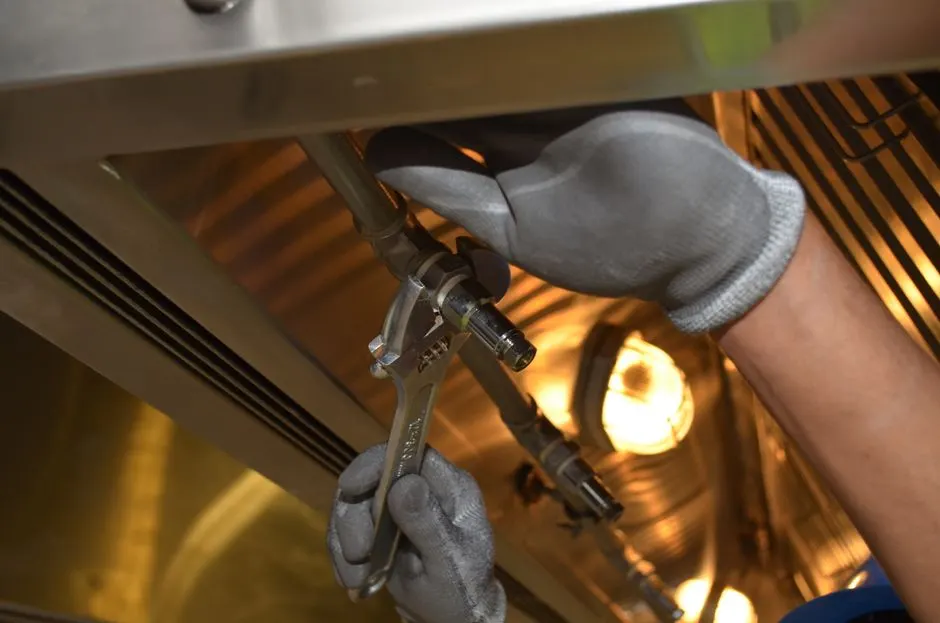
A gas furnace making banging noise when starting up is almost always delayed ignition or a duct that is flexing as it heats. Delayed ignition happens when gas builds up in the burner compartment for a second or two before it lights, and that pocket of gas ignites all at once with a bang. A duct bang is quieter and comes from sheet metal popping as it expands. Both are common in Utah, and one of them is worth shutting the furnace down for tonight.
We are Furnace Pros Utah, and we have walked into hundreds of mechanical rooms from Alpine to Brigham City with this exact complaint. Below we cover what causes the bang, how to tell the two apart, what a repair costs in 2026, and when you should stop running the furnace and call us instead.
Why does my gas furnace bang when it starts up?
Gas furnace banging on startup is a symptom, not a diagnosis. The bang is the sound of something releasing energy suddenly - either a delayed gas ignition inside the burner box or a pressure change in the ductwork. The first is a combustion problem. The second is a duct problem. They sound similar through a wall but they are not the same repair.
The definition worth remembering: delayed ignition is a condition where gas accumulates in the burner compartment for one to three seconds before the igniter lights it, producing a small controlled explosion instead of a clean flame. A healthy furnace lights in under a second. Once you hear the bang, the ignition sequence is already off by a measurable margin.
Utah homes make this worse in two ways. First, our winter temperature swings - a 55°F afternoon dropping to 18°F overnight along the Wasatch Front - cycle furnaces on and off more often than in milder climates, so a marginal igniter or dirty burner gets tested dozens of times a day. Second, a lot of the housing stock in places like Furnace Repair in Bountiful and American Fork was built between 1970 and 1995 with rigid sheet metal ductwork that was never insulated. That metal expands and contracts with every heat cycle, and after thirty years the seams loosen enough to pop.
The four most common causes of a banging gas furnace
1. Delayed ignition from a weak igniter or dirty burners
This is the loud one. The hot surface igniter or spark igniter is supposed to light the gas the instant the gas valve opens. When the igniter is worn, cracked, or coated in carbon, it takes longer. Gas keeps flowing. Then it lights - all at once.
Signs that point here: the bang is sharp and metallic, it happens two to five seconds after you hear the inducer fan start, and you may smell a faint gas odor right at startup. On a 20-year-old furnace, a replacement igniter runs $150 to $320 installed. Cleaning the burners and adjusting the gas pressure adds $120 to $250.
2. Expanding and contracting ductwork
This is the quieter, more hollow bang. Sheet metal ducts flex as they heat from 65°F to 140°F, and if the duct is undersized or the return air path is restricted, the pressure spike makes the metal oil-can. You will hear it five to fifteen minutes after startup, not immediately.
The fix is not a furnace part. It is duct work - adding a return, resizing a trunk line, or installing flex connectors at the plenum. Typical 2026 pricing in this area runs $400 to $1,400 depending on how much duct has to be modified.
3. A cracked heat exchanger
A cracked heat exchanger can cause a bang when combustion gases escape into the cabinet and ignite irregularly. This is the one you do not ignore. A cracked heat exchanger can push carbon monoxide into your living space, and it is the single most common reason we condemn a furnace on the spot.
You cannot see a cracked heat exchanger from the outside. It takes a visual inspection of the internal cells with a mirror and a combustion analyzer reading. If your furnace is 15 years or older and banging, this is on the list until we rule it out.
4. A gas valve or manifold pressure problem
If the manifold gas pressure is set too high, the burners over-fire and the ignition is violent. If it is too low, the burners are slow to light and you get the delayed ignition bang anyway. Either way, this is a combustion analysis job - we measure inlet and manifold pressure in inches of water column and set it to the manufacturer's spec, usually 3.5 in. w.c. for natural gas.
Is a banging furnace dangerous?
Yes, in some cases. A banging furnace is dangerous when the bang comes from delayed ignition inside the burner compartment or from a cracked heat exchanger. It is not dangerous when the bang is duct expansion, though it is annoying and it usually means your duct system is costing you money.
Here is how to tell the difference before you call anyone:
- Sharp bang right at startup, with a gas smell: delayed ignition. Shut the furnace off at the breaker and call us.
- Hollow pop five to fifteen minutes after startup: duct expansion. Not urgent, but worth fixing.
- Bang plus a yellow or lazy flame instead of blue: combustion problem. Shut it down.
- Bang plus a CO detector alarm: shut the furnace off, open windows, leave the house, call 911 if anyone feels ill.
If you have a CO detector and it has not gone off, that is good news but it is not clearance. CO detectors are calibrated to alarm at sustained low levels, not at the brief spike a single delayed ignition produces. We have found heat exchanger cracks in homes where the detector never chirped.
How do I fix a banging gas furnace?
You fix a banging gas furnace by matching the repair to the cause - igniter and burner service for delayed ignition, duct modification for expansion noise, and heat exchanger replacement or furnace replacement for a cracked cell. There is no single fix, and anyone who quotes you one over the phone without looking at the unit is guessing.
Here is the order we work in on a diagnostic call:
- Pull the burner compartment cover and inspect the igniter and flame sensor.
- Run the furnace and time the ignition sequence from inducer start to flame.
- Check manifold gas pressure with a manometer.
- Inspect the heat exchanger cells with a mirror and combustion analyzer.
- Check static pressure across the blower to see if the duct system is restricted.
That sequence takes about 45 to 60 minutes on most residential furnaces. Our diagnostic fee is waived when you approve the repair, and we quote the price before we start.
If the furnace is 18 years or older and the heat exchanger is compromised, the honest answer is usually replacement rather than repair. We handle Furnace Replacement in Utah with same-week scheduling on most standard installs, and we will tell you straight if repair is the better call for your budget.
What to watch out for
The most expensive mistake we see is homeowners treating a banging furnace as a duct noise and running it all winter. Delayed ignition does not fix itself. It gets worse as the igniter degrades further, and in the worst case it can crack the heat exchanger from repeated thermal shock.
Other things to avoid:
- Do not keep resetting the furnace hoping the bang stops. Each failed ignition cycle dumps more unburned gas into the cabinet.
- Do not tape or brace a banging duct as a permanent fix. You are treating the symptom and the pressure problem stays.
- Do not skip the heat exchanger inspection because the furnace is still heating. A cracked exchanger still produces heat - right up until it does not.
- Do not accept a tune-up as the fix if the technician never measured gas pressure or inspected the exchanger. A tune-up is maintenance, not a diagnosis.
If your furnace was recently serviced and started banging afterward, that is worth a callback. A furnace banging noise after a tune-up usually means the burner or manifold was disturbed and not re-set to spec, and the shop that did the work should make it right.
When to call a professional
Call a professional the moment the bang is sharp, happens at ignition, or comes with any gas smell. Those three together point to delayed ignition, and that is a combustion repair - not a homeowner job. Gas pressure adjustments, igniter replacement, and heat exchanger inspection all require tools and training that most people do not have in the garage.
We handle Gas Furnace Repair in Utah for every major brand - Carrier, Trane, Lennox, Rheem, Goodman, and Bryant - and we stock the common igniters and flame sensors on the truck so most repairs finish in one visit. If the furnace is down and it is below freezing outside, we also run Emergency Furnace Repair in Utah with 24-hour dispatch.
One thing we tell every customer: if you are not sure whether the bang is dangerous, shut the furnace off at the breaker and call. A night without heat is uncomfortable. A night with a cracked heat exchanger is a different category of problem.
Frequently Asked Questions
Why is my gas furnace making a banging noise in Utah?
In Utah, the two most common causes are delayed ignition from a worn igniter or dirty burners, and sheet metal duct expansion. Delayed ignition bangs sharply right at startup. Duct expansion pops hollowly five to fifteen minutes later. A cracked heat exchanger is the third possibility and the one to rule out first on any furnace over 15 years old.
Is a banging furnace dangerous in Utah?
It can be. Delayed ignition and a cracked heat exchanger are both dangerous - the first can damage the burner assembly, the second can leak carbon monoxide into your home. Duct expansion noise is not dangerous. If you smell gas or your CO detector alarms, shut the furnace off and call us immediately.
How do I fix a gas furnace banging noise in Utah?
Match the repair to the cause. Igniter replacement runs $150 to $320 installed, burner cleaning $120 to $250, duct modification $400 to $1,400, and heat exchanger replacement often pushes toward full furnace replacement. A proper diagnostic takes 45 to 60 minutes and includes a combustion analysis and heat exchanger inspection.
Should I turn off my furnace if it is banging in Utah?
Yes, if the bang is sharp, happens at ignition, or comes with a gas smell. Shut it off at the breaker, not just the thermostat. If the bang is a hollow pop well after startup and there is no gas odor, you can run it while you schedule a service call - but get it looked at within the week.
How much does it cost to fix a banging furnace in Utah?
Most banging furnace repairs in Utah land between $150 and $600 in 2026. Igniter replacement is the low end. Burner and gas pressure service sits in the middle. Duct modifications run $400 to $1,400. If the heat exchanger is cracked, replacement of the furnace typically runs $3,200 to $6,500 installed.
Get help with Furnace Repair in Utah
If your gas furnace is banging on startup, we will diagnose it, tell you exactly what is wrong, and quote the repair before we touch a wrench. We serve the entire Wasatch Front and most of rural Utah, and we keep the common parts on the truck.
Call Furnace Pros Utah at (866) 961-2544 and we will get a technician out to you - usually the same day.